


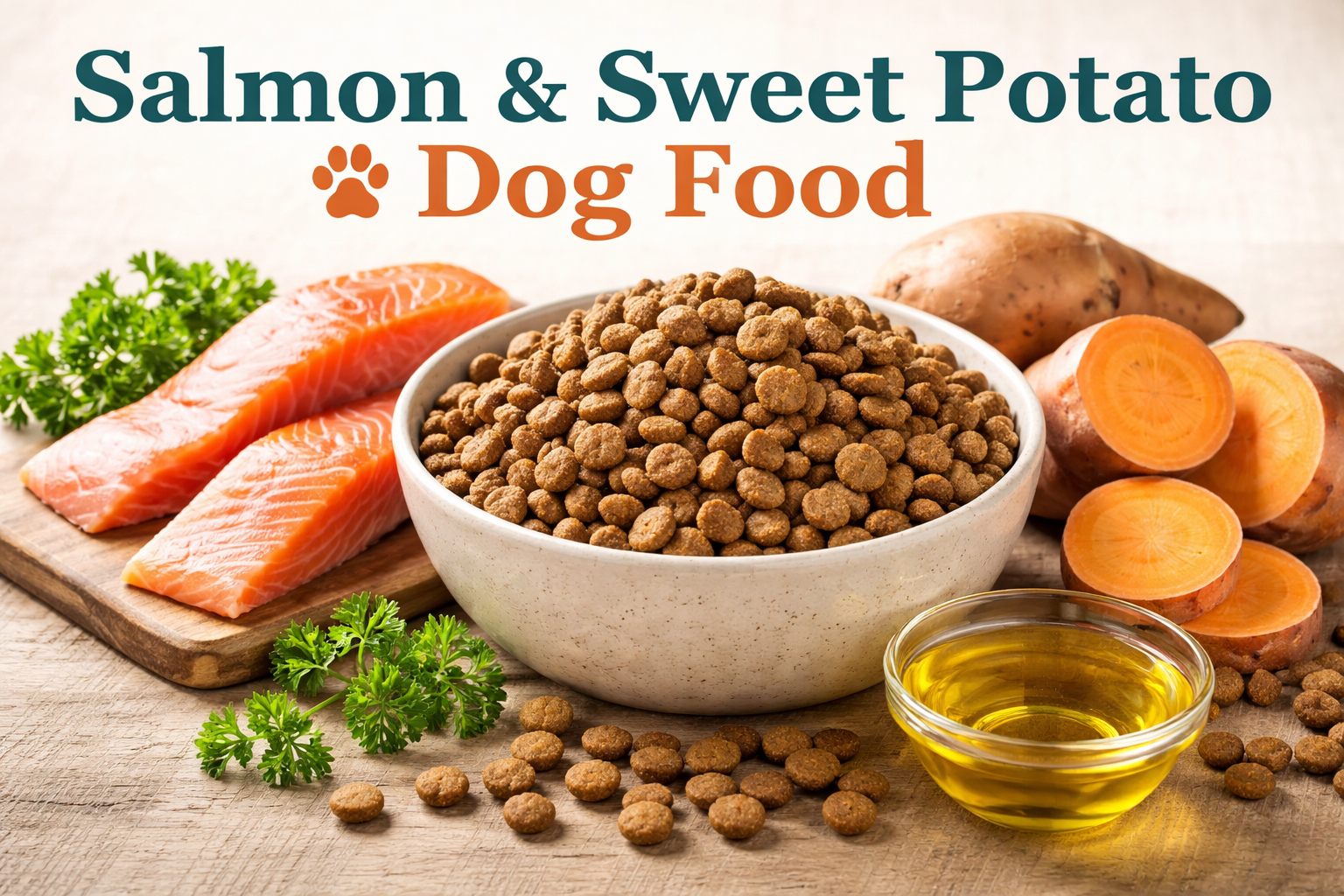
The Ultimate Guide to Salmon and Sweet Potato Dog Food
Choosing the right diet for your canine companion is crucial, and salmon and sweet potato dog food has become a top choice for pet parents across the United States. This formulation pairs high-quality aquatic protein with a complex carbohydrate, offering a highly digestible meal. It is popular among owners looking for alternative protein sources. Beyond its rich taste, this combination supports skin health and sustained energy. Understanding this diet helps you make an informed decision for their wellbeing.
What is salmon and sweet potato dog food?
Salmon and sweet potato dog food is a specialized canine diet combining premium fish protein with easily digestible carbohydrates. Dog owners choose it because it is rich in omega-3 fatty acids and often serves as a hypoallergenic, grain free recipe that supports healthy skin and optimal digestion.
Table of contents
What Is Salmon and Sweet Potato Dog Food
This specific type of food blends real fish with root vegetables to create a nutrient-dense meal. Available in dry kibble and wet forms, it caters to various feeding preferences.
Often formulated as a grain free recipe, it purposefully excludes wheat, corn, and soy to mimic an ancestral diet.
For urban dog owners—whether living in a quiet suburb or managing a fast-paced lifestyle near 50 California Street in San Francisco—this high-quality food supports an active canine lifestyle perfectly.
Nutritional Benefits for Dogs
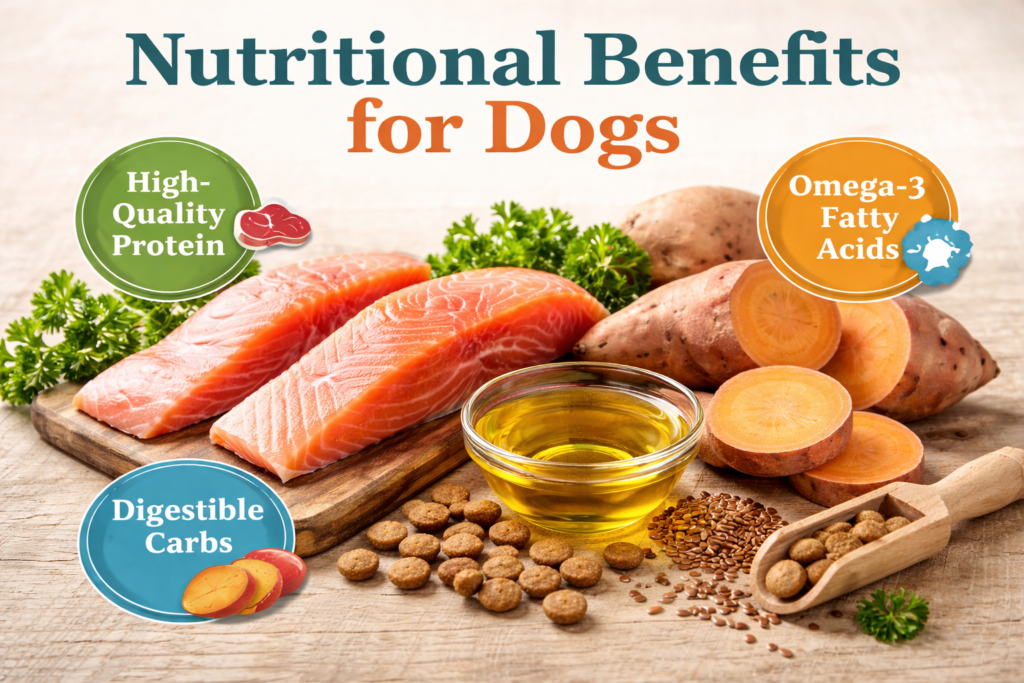
Real salmon provides an exceptional source of lean protein, which is vital for muscle maintenance. It is also packed with omega-3 fatty acids, promoting cognitive function and reducing inflammation.
The addition of fish oil further enhances coat health, reducing dryness. Meanwhile, sweet potato acts as a low-glycemic carbohydrate, providing sustained energy without blood sugar spikes.
According to the American Kennel Club (AKC), marine-sourced fatty acids are highly beneficial for joint mobility and heart health.
Ingredients Breakdown and What to Look For
Always look for whole salmon as the primary ingredient. A balanced formula ensures your pet receives every essential nutrient required for daily vitality and immune support.
High-quality diets include specific vitamins for cellular function. Look for a vitamin e supplement, alongside b-vitamins like thiamine mononitrate, pyridoxine hydrochloride, calcium pantothenate, folic acid, and a vitamin b12 supplement.
Crucial minerals are also integrated into premium recipes. Trace minerals like copper sulfate and calcium iodate support thyroid health, while a vitamin d3 supplement aids in calcium absorption.
Finally, ensure the kibble is naturally preserved with mixed tocopherols rather than artificial chemicals.
Is It Good for Adult Dogs and Sensitive Dogs?
A salmon sweet potato diet is exceptionally well-suited for adult dogs, providing the perfect macronutrient balance to maintain a healthy weight.
It is highly recommended for dogs with food sensitivities. Since poultry is a common allergen, switching to a novel protein can soothe gastrointestinal distress and alleviate itchy skin.
Feeding Tips and Practical Advice
Follow the feeding guidelines on the packaging, adjusting portions based on your dog’s age and weight. To prevent obesity, strictly avoid overfeeding.
Transition to a new dog food gradually over seven to ten days. Mix the new kibble with their current food, slowly increasing the ratio to prevent stomach upset.
The Association of American Feed Control Officials (AAFCO) provides excellent guidelines on how to read feeding labels to ensure complete and balanced nutrition.
Frequently Asked Questions
Is salmon sweet potato dog food good for all dogs?
Yes, it is excellent for most breeds, though puppies and seniors may require life-stage-specific formulations for optimal growth or joint support.
Is a grain free recipe better than regular dog food?
It depends on the dog. Grain-free options are ideal for dogs with diagnosed grain allergies or sensitivities.
What nutrients should I look for?
Look for animal protein, complex carbohydrates, and comprehensive vitamin profiles to ensure balanced nutrition.
Can dogs with allergies eat this type of food?
Absolutely. Salmon is a novel protein for many dogs, making it a great alternative for those reacting to chicken or beef.
Conclusion
Choosing a high-quality canine diet is a significant investment in your pet’s future. The combination of aquatic protein and root vegetables offers comprehensive, science-backed health benefits.
From supporting a glossy coat to ensuring smooth digestion, this choice is ideal for sensitive and active companions alike. By understanding the ingredients, you can confidently nourish your furry friend.


